Ask
Review this auth PR before I merge.
Result
Finds the risky fallback, names impact, suggests one regression test, states what was not run.
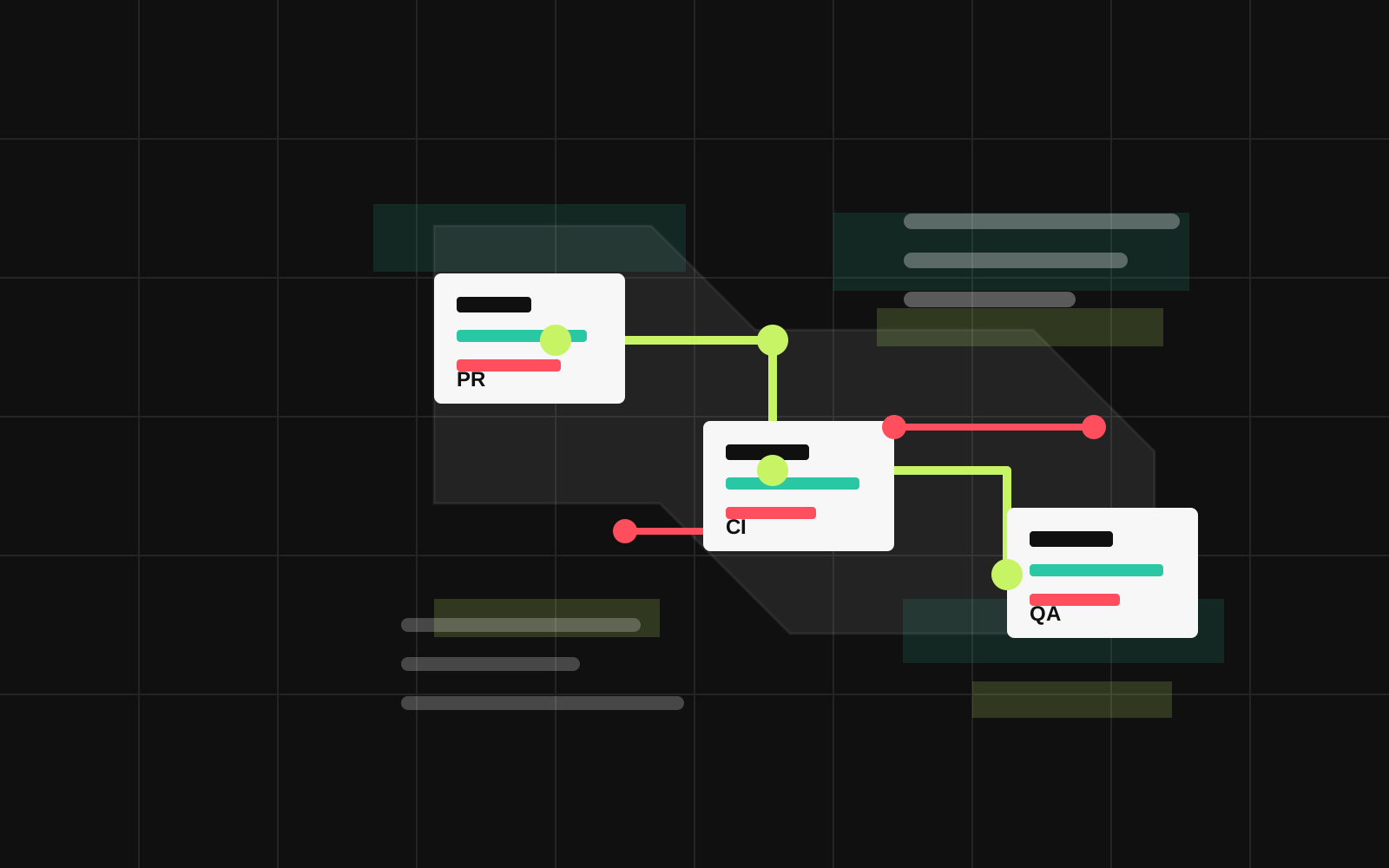
The first Builder Core bundle
Small AI teams are shipping more code than they can safely review. Builder Core is built for the moments before merge: review the diff, explain the failure, check the UI, and show why the recommendation deserves trust.
Register interest with non-sensitive product signal only. No private code, repo links, logs, screenshots, secrets, or customer data from this page.
What you ask
Builder Core is not trying to chat about everything. It is built for the tense, practical questions that decide whether a small team ships cleanly or carries hidden risk.
Review this auth PR before I merge.
Finds the risky fallback, names impact, suggests one regression test, states what was not run.
Tell me why this CI job failed.
Separates noisy output from the likely root cause and gives the smallest fix path.
Check this frontend before the demo.
Surfaces behavior, responsive, accessibility, and state risks without inventing a browser pass.
The company vision
AI-native teams will not win by adding more vague assistants. They will win by hiring narrow agents for real jobs, with visible judgment, clear limits, and humans still in control. Builder Core is the first proof point: the build team.
A five-person team should be able to operate with sharper review, test, and QA judgment than headcount alone would allow.
The product starts with agents that do one job clearly instead of pretending one broad AI worker can handle everything.
The agent earns belief by showing evidence, impact, smallest fix, and limits before anyone ships.
How it works
Builder Core starts where small teams already lose time and quality: risky review, broken tests, and frontend QA. The answer must make the work easier to judge, not just sound confident.
Diff, failing output, or UI expectation. The agent starts from the work in front of it.
It points to concrete files, output, states, or behavior behind the claim.
The answer should reduce risk without inventing a rewrite.
Unverified checks and uncertain conclusions stay visible before anyone ships.
Why now
AI makes more software possible. It also makes more review, test, and QA debt possible. The teams that win will not be the ones generating the most code. They will be the ones that can still tell what is safe to ship.
Fast changes can hide security, reliability, and test gaps that normal review misses.
Broken checks waste time when the real cause is buried inside noisy output.
UI issues slip through when behavior, layout, accessibility, and states are checked too late.
The first agents
Builder Core starts with the work a technical founder can recognize immediately: risky diffs, broken checks, and UI regressions. Each agent has to make the decision easier, not just louder.
Finds concrete PR risks, missing tests, and practical fix directions from the available diff evidence. Built for review pressure, not broad security theater.
Learn about secure PR reviewTurns failing output into a clear root-cause hypothesis, a minimal fix path, and an honest statement of what was and was not verified.
Learn about CI failure analysisChecks implementation against expected behavior, responsive constraints, accessibility basics, and UI states without pretending a browser or screenshot pass happened when it did not.
Learn about frontend QA checksSanitized examples
These are generic examples. They do not contain customer code, private links, logs, screenshots, secrets, or confidential material.
Trust rules
Builder Core should earn confidence the same way a strong specialist does: show the evidence, explain the impact, recommend the smallest useful fix, and say where the evidence stops.
Every serious finding needs a concrete file, diff, command output, artifact, or observed behavior behind it.
The answer should explain why the issue matters and who gets hurt if it ships.
The suggested fix should be the smallest practical correction, not a rewrite for its own sake.
Missing checks, uncertain evidence, and risky calls stay visible so humans keep control.
Who it is for
Not for
FAQ
Builder Core is deliberately narrow. The current public position is secure PR review, CI failure analysis, and frontend QA discipline for small AI-native teams.
Builder Core is a focused bundle of trusted build agents for small AI-native teams that need stronger review, CI, and frontend QA discipline.
Trusted build agents are specialist agents that show evidence, explain impact, recommend small fixes, and state their limits.
No. Builder Core is not an email, calendar, messaging, or personal-life assistant. It focuses on build work: PR review, CI failure analysis, and frontend QA.
It focuses on concrete diff risks, missing tests, security-sensitive changes, and practical fix direction from the available evidence.
It turns failing output into a root-cause hypothesis, a minimal fix path, and a clear statement of what was actually verified.
It checks expected behavior, responsive layout, accessibility basics, and UI states without pretending a browser pass happened when it did not.
This public page does not accept private repositories, code, logs, screenshots, secrets, or customer data. Any future access will be selective and reviewed.
Register interest
Tell us where review, CI, or frontend QA hurts today. We are looking for teams that feel the pressure clearly enough to help shape our first trusted build-agent bundle. Do not send private code, repo links, logs, screenshots, secrets, customer data, or confidential material.
Where the company goes
The bigger company vision is a place where teams choose specialist agents the way they choose trusted teammates: by job, permission, evidence, and limits. Builder Core starts with build work because shipping pressure is immediate, repeated, and expensive to get wrong.
Code review, CI, and frontend QA are already real work on small teams.
Every new agent has to prove its job, evidence, and boundaries before the catalog expands.
The long-term category only works if every agent makes risky work easier to inspect, not easier to hide.